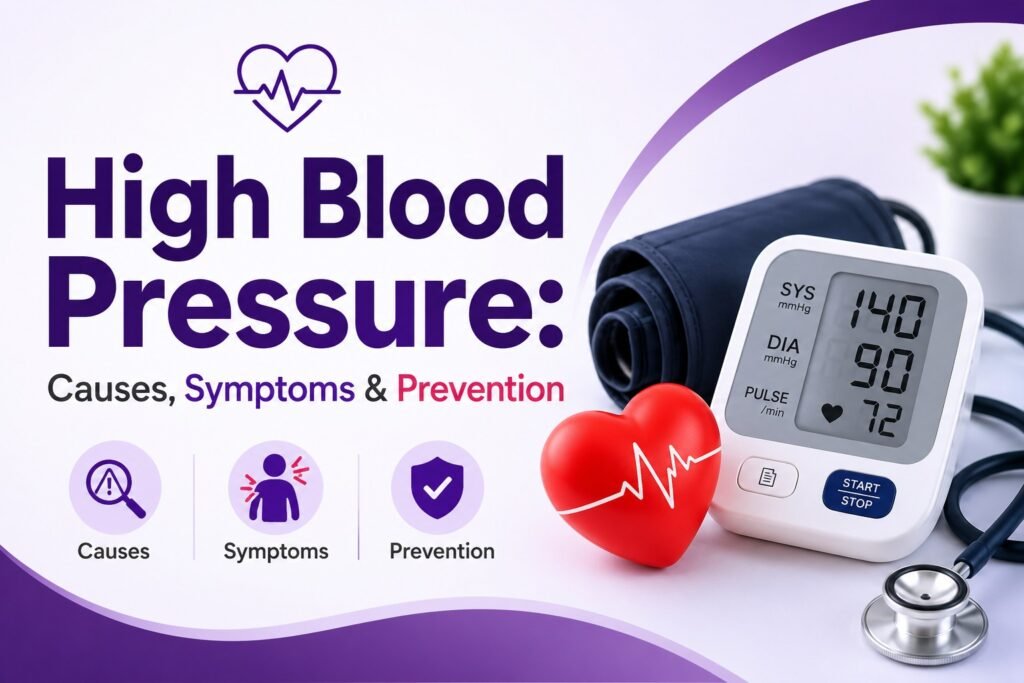
High Blood Pressure: Causes, Symptoms & Prevention
Understanding Hypertension and How to Protect Your Heart Health
High Blood Pressure, also known as Hypertension, is one of the most common health conditions worldwide. It affects millions of people and significantly increases the risk of heart disease, stroke, kidney disease, and other serious health complications.
The alarming fact is that many people with high blood pressure do not experience noticeable symptoms, making it a silent but dangerous condition. Understanding its causes, symptoms, and preventive measures can help you maintain better health and reduce future risks.
What is High Blood Pressure?
Blood pressure is the force of blood pushing against the walls of your arteries. When this pressure remains consistently higher than normal, it is known as hypertension.
A normal blood pressure reading is generally around 120/80 mmHg. Blood pressure readings consistently above 140/90 mmHg may require medical attention and treatment.
Common Causes of High Blood Pressure
Several factors can contribute to hypertension, including:
1. Unhealthy Diet
Excessive salt intake, processed foods, and unhealthy eating habits can increase blood pressure.
2. Lack of Physical Activity
A sedentary lifestyle can lead to weight gain and poor heart health.
3. Obesity
Being overweight puts additional strain on the heart and blood vessels.
4. Stress
Long-term stress can contribute to elevated blood pressure levels.
5. Smoking and Tobacco Use
Smoking damages blood vessels and increases the risk of hypertension.
6. Excessive Alcohol Consumption
Regular alcohol consumption can raise blood pressure over time.
7. Family History
Individuals with a family history of hypertension may have a higher risk of developing the condition.
8. Age
The risk of high blood pressure increases as people get older.
Symptoms of High Blood Pressure
Many people experience no symptoms at all, which is why hypertension is often called the “Silent Killer.”
However, some individuals may experience:
- Frequent Headaches
- Dizziness
- Shortness of Breath
- Chest Pain
- Fatigue
- Blurred Vision
- Nosebleeds
- Irregular Heartbeat
If you experience any of these symptoms regularly, consult a healthcare professional immediately.
Risk Factors for Hypertension
You may be at higher risk if you:
- Are overweight or obese
- Consume a high-salt diet
- Have diabetes
- Smoke regularly
- Drink alcohol excessively
- Have a family history of hypertension
- Lead a physically inactive lifestyle
- Experience chronic stress
Why High Blood Pressure is Dangerous
Uncontrolled hypertension can lead to serious health complications such as:
Heart Disease
High blood pressure forces the heart to work harder, increasing the risk of heart attacks and heart failure.
Stroke
Elevated blood pressure can damage blood vessels in the brain and increase stroke risk.
Kidney Disease
Hypertension can damage the kidneys and reduce their ability to function properly.
Vision Problems
Damage to blood vessels in the eyes can affect vision and lead to complications.
Brain Health Issues
Long-term hypertension may increase the risk of memory problems and cognitive decline.
How to Prevent High Blood Pressure
The good news is that hypertension can often be prevented through healthy lifestyle choices.
Eat a Healthy Diet
Include fruits, vegetables, whole grains, and lean proteins in your daily meals.
Reduce Salt Intake
Limiting sodium consumption can help control blood pressure effectively.
Exercise Regularly
Aim for at least 30 minutes of moderate physical activity most days of the week.
Maintain a Healthy Weight
Weight management can significantly reduce hypertension risk.
Avoid Smoking
Quitting smoking improves overall cardiovascular health.
Limit Alcohol Consumption
Moderate alcohol intake helps maintain healthier blood pressure levels.
Manage Stress
Practicing relaxation techniques such as meditation and yoga can help lower stress levels.
Importance of Regular Blood Pressure Monitoring
Regular blood pressure checks are essential because hypertension often develops without noticeable symptoms.
Early detection allows doctors to:
- Monitor blood pressure trends
- Identify risk factors
- Recommend lifestyle changes
- Start treatment when necessary
- Prevent future complications
Importance of Regular Blood Pressure Monitoring
High blood pressure is a serious but manageable health condition. Early detection, healthy lifestyle choices, and regular medical care can significantly reduce the risk of complications.
If you have a family history of hypertension or experience symptoms such as headaches, dizziness, or chest discomfort, schedule a medical checkup today.
Taking control of your blood pressure today can help protect your health tomorrow.
Visit Al Mahmood General Hospital
- +91 94847 90088
- 02644 221786
- Bypass Road, Beside Darul Quran Campus, Jambusar, Gujarat
Tags
High Blood Pressure Treatment in Jambusar, Hypertension Specialist in Jambusar, BP Doctor in Jambusar, Heart Health Hospital in Jambusar, Blood Pressure Checkup in Bharuch, General Medicine Hospital in Jambusar, Hypertension Symptoms and Prevention, Best Physician in Jambusar.