
10 Early Signs of Diabetes You Should Never Ignore
Recognizing the Warning Signs for Early Diagnosis and Better Health
Diabetes is one of the most common chronic health conditions affecting millions of people worldwide. It occurs when the body cannot properly regulate blood sugar (glucose) levels due to insufficient insulin production or ineffective insulin use.
The biggest challenge with diabetes is that its early symptoms are often mild and easily ignored. Recognizing these warning signs early can help prevent serious complications such as heart disease, kidney damage, nerve problems, and vision loss.
In this article, we discuss the early signs of diabetes that should never be ignored.
What is Diabetes?
Diabetes is a condition in which blood glucose levels become higher than normal. Glucose is the body’s primary source of energy, but when blood sugar remains uncontrolled, it can damage various organs and systems over time.
The two most common types are:
Type 1 Diabetes
A condition where the body produces little or no insulin.
Type 2 Diabetes
The most common type, where the body becomes resistant to insulin or doesn’t use it effectively.
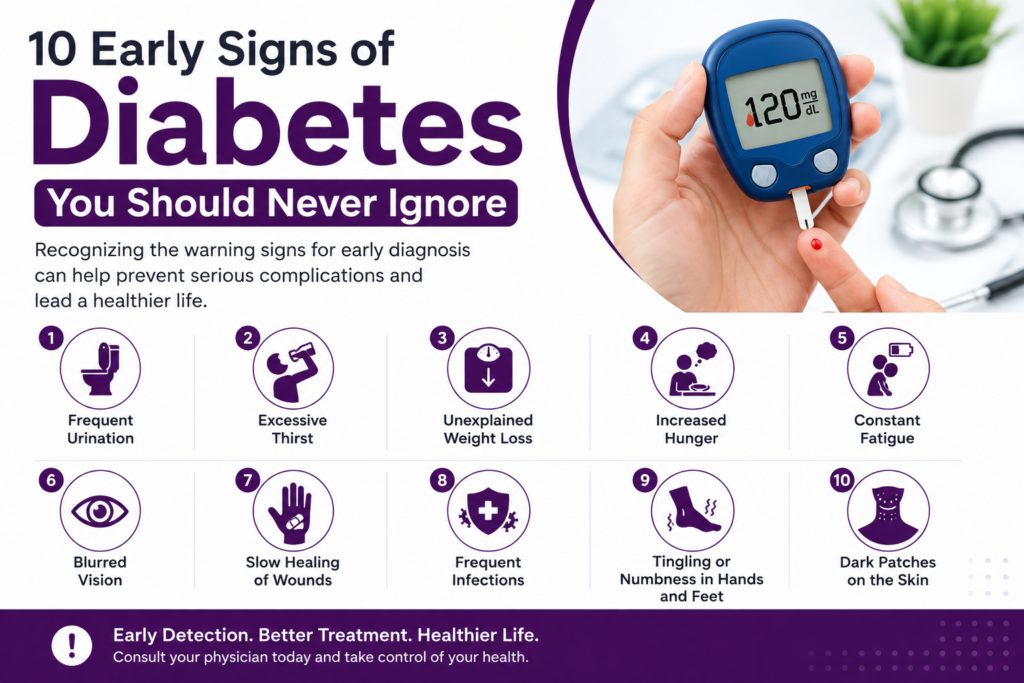
10 Early Signs of Diabetes
1. Frequent Urination
One of the earliest signs of diabetes is frequent urination, especially during the night.
When blood sugar levels rise, the kidneys work harder to remove excess glucose from the body, causing increased urine production.
Warning Sign:
If you notice a sudden increase in bathroom visits without any obvious reason, consult a doctor.
2. Excessive Thirst
Frequent urination causes the body to lose more fluids, leading to dehydration and increased thirst.
People with diabetes often feel thirsty even after drinking enough water.
Warning Sign:
Constant thirst that doesn’t improve despite adequate hydration.
3. Unexplained Weight Loss
Sudden weight loss without changes in diet or exercise can be an early symptom of diabetes.
When the body cannot use glucose properly, it starts burning fat and muscle for energy.
Warning Sign:
Losing weight unexpectedly over a short period.
4. Increased Hunger
Even after eating meals, many diabetic patients continue to feel hungry.
This happens because the body’s cells are unable to use glucose effectively for energy.
Warning Sign:
Feeling hungry shortly after meals on a regular basis.
5. Constant Fatigue
High blood sugar levels can affect how the body uses energy, leading to persistent tiredness and weakness.
Warning Sign:
Feeling exhausted even after getting enough rest.
6. Blurred Vision
Elevated blood sugar levels can affect the eyes and cause temporary vision changes.
Warning Sign:
Difficulty focusing or experiencing blurry vision frequently.
Early treatment can help prevent serious eye complications.
7. Slow Healing of Wounds
Diabetes can reduce blood circulation and weaken the body’s ability to heal.
Warning Sign:
Cuts, wounds, or bruises that take longer than usual to heal.
8. Frequent Infections
High blood sugar can weaken the immune system, making individuals more prone to infections.
Common infections include:
- Skin infections
- Urinary tract infections
- Gum infections
- Fungal infections
Warning Sign:
Recurring infections that return frequently.
9. Tingling or Numbness in Hands and Feet
High blood sugar can damage nerves over time.
Warning Sign:
Tingling, burning sensations, or numbness in the hands and feet.
Early diagnosis can help prevent permanent nerve damage.
10. Dark Patches on the Skin
Some individuals with Type 2 diabetes may develop dark, velvety patches of skin around the neck, underarms, or groin.
This condition is often linked to insulin resistance.
Warning Sign:
Unusual darkening of skin folds.
Who is at Higher Risk of Diabetes?
You may have a higher risk if you:
- Have a family history of diabetes
- Are overweight or obese
- Have high blood pressure
- Lead a physically inactive lifestyle
- Are above 40 years of age
- Have high cholesterol levels
Regular screening is especially important for high-risk individuals.
Conclusion
Diabetes often develops gradually, making it easy to overlook the warning signs. Paying attention to symptoms such as frequent urination, excessive thirst, fatigue, blurred vision, and slow-healing wounds can help detect diabetes at an early stage.
If you notice any of these symptoms, don’t delay seeking medical advice. Early diagnosis and proper treatment are the keys to preventing long-term complications.
Visit Al Mahmood General Hospital
- +91 94847 90088
- 02644 221786
- Bypass Road, Beside Darul Quran Campus, Jambusar, Gujarat
Tags
Early Signs of Diabetes, Diabetes Symptoms, Diabetes Treatment in Jambusar, Diabetes Doctor in Jambusar, General Medicine Hospital in Jambusar, Blood Sugar Test in Jambusar, Diabetes Care Hospital in Bharuch, Best Physician for Diabetes.